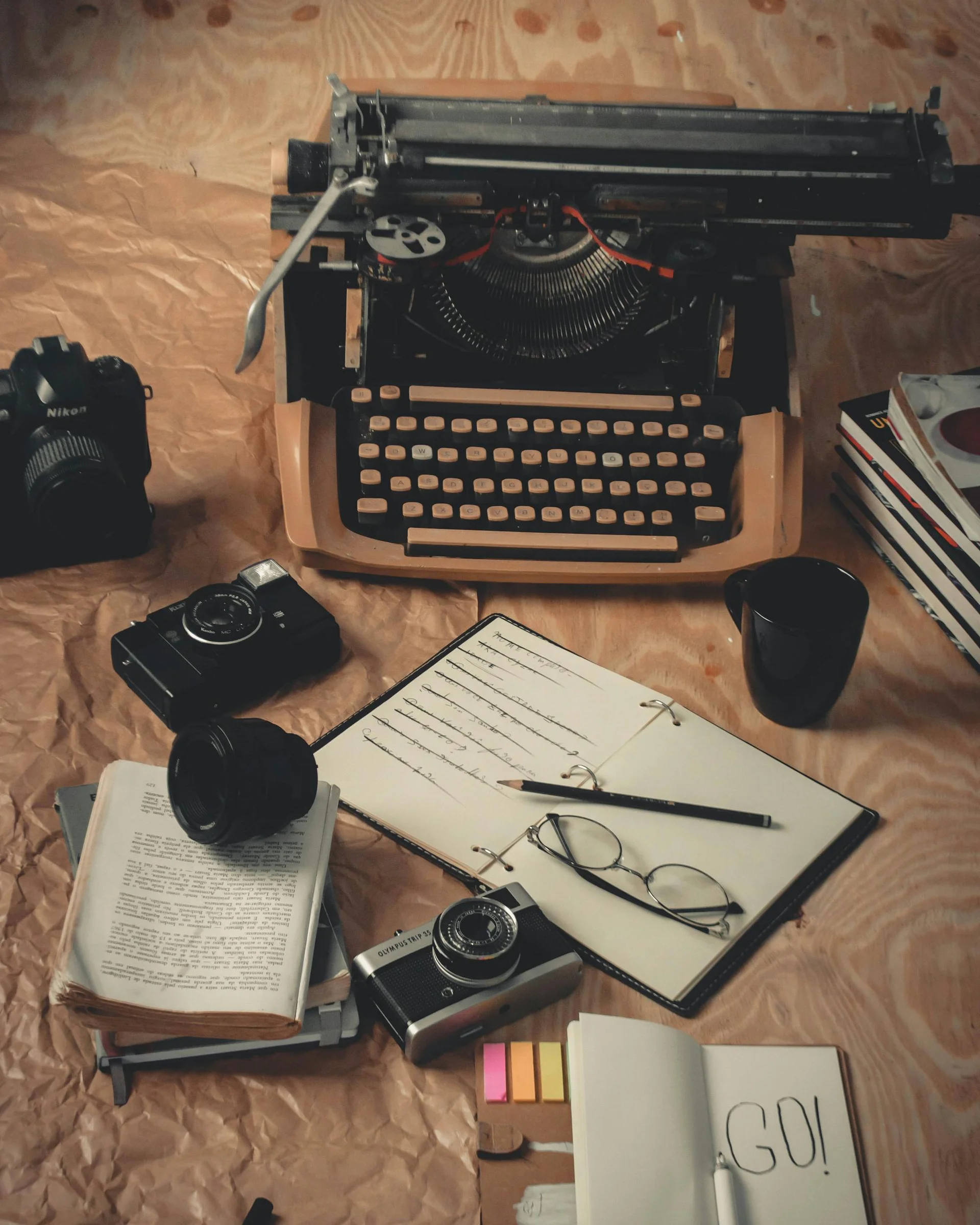
Sameer Alsheikh started with a pen, a page, and a huge fire in his heart to tell a story. That fire never ended. It's what runs this lab today.
The spirit of media hasn’t changed in fifty years. The medium has. Alsheikh Media exists where those two facts meet.
We run a digital media lab in 2026 — AI-augmented publishing, bilingual content infrastructure, semantic web architecture built for the human reader and the AI agents that now read alongside them. But the values underneath this lab — the ones that shape how we make decisions, what we refuse to publish, and what we actually care about in a piece of writing — those start fifty years earlier, with a journalist, a pen, and an Abu Dhabi that was finding its own voice.
The Beginning
Sameer Alsheikh began his career at the Ministry of Health in Abu Dhabi in the mid-seventies. He wrote. He reported. He learned what it meant to communicate in a region that was building itself in real time. By the late seventies, he had moved to Sharjah — first to Al Ayam, then to Al Khaleej — spending years in the Gulf’s print newsrooms at the height of their relevance.
He was the kind of journalist other people went to. Not just editors, not just colleagues — deans of university schools would seek him out for advice. By the late nineties, the University of Sharjah had made that relationship official, bringing him in as media advisor and consultant to the chancellor and the board. He wrote their speeches. He shaped how an institution communicated with itself and with the world. He published books. He contributed to every form of Arab media output the era offered.
When he retired, two years ago, he had spent roughly half a century in the business. Not on the edges of it. Inside it.
The Inheritance Was Informal
You don’t inherit this kind of thing by reading your father’s bylines.
Sameer Alsheikh took his son to conferences. Not as a child tagging along — as someone being shown a craft. How a journalist actually gets to the truth. How to make real connections with people. When to be warm and open, and when to press. How to ask the question that gets the truth out of someone who doesn’t want to give it.
Hassan was always behind a microphone. Since school. The desire to teach the audience something — to share something worth sharing, to tell a story that lands — was there from the beginning. In the late nineties and early two-thousands, he was part of the founding team of the radio station at the American University of Sharjah, where he studied. He has hosted more events than he can count.
And from 1998, he was building websites. Arabic websites — when almost no one in the UAE was doing it. When almost no one in the world was doing it. A small group of people were creating Arabic web presences globally in those years. Hassan was one of them. He has never stopped.
He worked in radio professionally from 2003. He was on television — multiple shows on multiple stations. He built digital alongside traditional media for decades, believing in the power of the web earlier than almost anyone around him. Earlier this year, he stepped away from traditional media entirely to run Alsheikh Media full-time. A project that had been running in parallel for years finally became the main event.
What We Carried Forward
Moving from a newsroom heritage into a digital lab wasn’t a pivot. A pivot suggests you change direction while keeping the same pace and the same assumptions. What actually happened was a harder question: what in this fifty-year inheritance is worth carrying, and what was institutional habit dressed as principle?
Three things made the move:
- The long view. Good journalism — and good digital content — is not written for this week. It is written for the reader who finds it six months from now via a search or a recommendation from a colleague. That shapes how we choose subjects, how we build arguments, and how long we are willing to take to get something right.
- The editorial function. AI does many things well. It does not make the call at the center of every piece: Is this true? Is this fair? Does this serve the reader, or does it serve us? That call is made by a person. It will stay that way.
- Arabic as a first language. Fifty years of Arab journalism leaves no ambiguity here. Arabic is not a translation target. The Arabic version of anything we publish is written for Arabic readers — in Arabic logic, Arabic rhythm, Arabic register. It is not the English version rendered in another script.
What We Left Behind
Some things from the traditional newsroom didn’t make the move. Not because we couldn’t carry them — because they shouldn’t come.
- The assumption that publishing equals authority. Digital ended the captive audience. A reader has no obligation to read you because you publish. You earn attention on every single piece, regardless of your history.
- The broadcast hierarchy. A lab works differently — flatter, faster, with more autonomy at every level. The slow editorial chain of the print newsroom isn’t built for the pace of the web.
- The belief that distribution is someone else’s problem. We own our channels. We are not tenants on platforms we don’t control.
What Legacy Actually Means
In media, “legacy” usually means one of two things: a brand coasting on past reputation, or a constraint that prevents the institution from adapting. Neither is useful.
We mean something different by it.
For us, the fifty-year legacy is a set of tests we run against every decision:
- Is this true to what we know about our audience?
- Does this serve the reader, or does it serve us?
- Would we be comfortable with this call in five years?
These tests don’t come from a values document. They come from fifty years of a family in journalism — making calls, being wrong, correcting, building trust slowly, losing it fast when care slipped, rebuilding it again.
The lab is the infrastructure. The legacy is the ethic.
Where We Go From Here
We are at the beginning of something, not the middle. Arab digital media is being reinvented. AI is changing publishing faster than most institutions can adapt. The companies that will matter in a decade are the ones that carry genuine editorial judgment into the new infrastructure — not the ones that use new tools as an excuse to skip the hard parts.
Sameer Alsheikh started with a pen and a fire in the mid-seventies. Hassan took that fire into radio, into television, into building Arabic websites when the world had barely heard of the web. Now it runs a digital lab.
The obligation is to carry it honestly.